Product Engineering
MVP Development Services
An MVP is an experiment with a codebase attached. We pin down the hypothesis, the metric and the threshold that counts as a pass, then build the smallest working product that can test it - instrumented from launch, with the parts worth keeping built properly and the shortcuts labelled as shortcuts.
HOW IT RUNS
From hypothesis to evidence
Four phases, from hypothesis to evidence. Each one ends in something you can make a decision on.
Hypothesis, Scope & Technical Plan
"Minimum" gets defined here, not assumed. We write down the hypothesis, the metric and the pass threshold, turn them into a fixed feature list, and agree the architecture, sprint plan and cost before any code is written.
DELIVERABLES
- Hypothesis, metric and pass threshold
- Fixed MVP feature list, plus the v2 list
- Keep-or-throwaway map per component
- Technical architecture plan
- Sprint plan and statement of work
- Client inputs checklist: accounts, content, users
What We Build
MVP development services, from hypothesis to launch
Web, iOS or Android: the same six services, scoped to what the MVP has to prove.
MVP Scoping & Feature Prioritisation
A fixed feature list derived from the hypothesis: what tests it, what waits for v2, and what was never needed at all.
Full-Stack MVP Development
Front end, back end and infrastructure built to the minimum set that tests the idea, not an early draft of the whole product.
Backend & API Development
Real storage, real logic, real integrations: enough for genuine users to rely on it.
Scalable Architecture Foundation
The parts likely to survive validation built to production standard, so they carry into v2 without a rewrite.
QA & Pre-Launch Testing
Functional, security and load testing scoped to how early users will actually use the product.
Go-to-Market & Launch Support
Analytics events, error monitoring and a feedback channel live at launch, so real usage data arrives from day one.
Our Methodology
An MVP proves one thing, or it proves nothing
Test five ideas at once and none of the results mean anything. What stays out of version one is decided as deliberately as what goes in.
The Smallest Test of the Idea
The feature set covers the core assumption and nothing else. Everything that doesn't test it waits.
Real Users, Real Data
The MVP reaches real users before the v2 roadmap is fixed, so the next cycle follows behaviour, not opinion.
Keep or Throw Away, Decided Early
Each component is marked as a keeper or a shortcut, so nobody mistakes a shortcut for a foundation later.
A Fixed List, Not an Open Scope
New requests are tested against the hypothesis before they're added. Creeping scope is how MVPs miss their window.
Build Practice
Built lean, not built to be thrown away
Ship an MVP without structure, security or tests, and its first growth spurt becomes a rewrite.
The parts likely to survive are built at production standard. The shortcuts are documented, so v2 starts from facts rather than archaeology.
Standard, widely supported tools. Nothing your team can't take over, and no no-code platform without a written exit path.
Modular Architecture
Features built as independent components, so what validates moves forward without dragging along what didn't.
Code Quality Standards
Keepers reviewed and tested to production standard, because they usually become the production build.
Documentation
Every scope cut recorded with its reason, so the roadmap can pick it back up with full context.
Security by Design
Authentication and data handling scoped in planning, before the MVP collects a single real user's data.
Performance Benchmarking
Load tests sized to launch traffic, not a lab environment that never matches it.
Compliance Readiness
For regulated industries, the obligations that apply are scoped into the MVP from the start, not left for after validation.
Technology Stack
Technologies we build MVPs with
Web or mobile, the stack passes one test: is it the quickest dependable route to the evidence the MVP exists to gather?
React Native
Cross-platform mobile MVPs that need a native feel from one shared codebase.
App Store · Play StoreNode.js / Python
Back ends and data pipelines for real-time features and automated data extraction.
AWS · Azure · GCPOpenAI / Vectara
Generated text and semantic search, for products where AI is part of the core proposition.
AI · RAG · RetrievalFirebase
Authentication, remote configuration and analytics for MVPs that need to change behaviour without a redeploy.
Real-time backend servicesChosen per hypothesis. The stack follows what the MVP must prove, not a default template.
Cloud & DevOps
 Docker
 Kubernetes
Testing & QA
CI/CD
 GitHub Actions
 Jenkins
Where It Breaks
Why MVPs stall before launch
MVPs rarely die of technical problems. They die of a word nobody defined: "minimum".
The Whole Product as the MVP
Every stakeholder idea lands in version one because nobody can argue it out. What eventually ships is neither minimum nor validated.
No Hypothesis, No Finish Line
Without a stated assumption and a pass threshold, every opinion is essential, and negotiation replaces discipline.
Disposable by Accident
Code written to hit a date becomes the foundation by default, and the successful MVP needs a rebuild the moment it has to grow.
Why Us
How we build MVPs
The difference between a partner who scopes a real MVP and one who builds whatever is asked.
01
Scope Held to the Hypothesis
Requests that don't test the hypothesis go on the v2 list, so the build stays minimum.
02
Kill Criteria Agreed Up Front
The metric and the threshold that mean stop, pivot or continue are written down before launch.
03
Keepers Built Properly
Code likely to survive validation is built to production standard; throwaway parts are labelled as throwaway.
04
Evidence for the Next Cycle
Instrumentation and usage reviews after launch decide the scope of the next build.
Vertical Focus
MVPs for industries where a wrong guess is expensive
Product teams inside established organisations, in sectors where getting it wrong costs more than time.
Patient-facing MVPs

- Patient intake and scheduling flows for clinics
- Health-data handling scoped in from the start
- Clinical workflow integrations with existing systems
- Telehealth and remote monitoring interfaces
- Care-team dashboards for real clinical workloads
Regulation-aware financial MVPs

- Onboarding and KYC flows
- Fraud-alert interfaces tested under transaction load
- Identity verification flows
- Audit trails on every transaction
- Portfolio dashboards on live data
Connected-vehicle MVPs
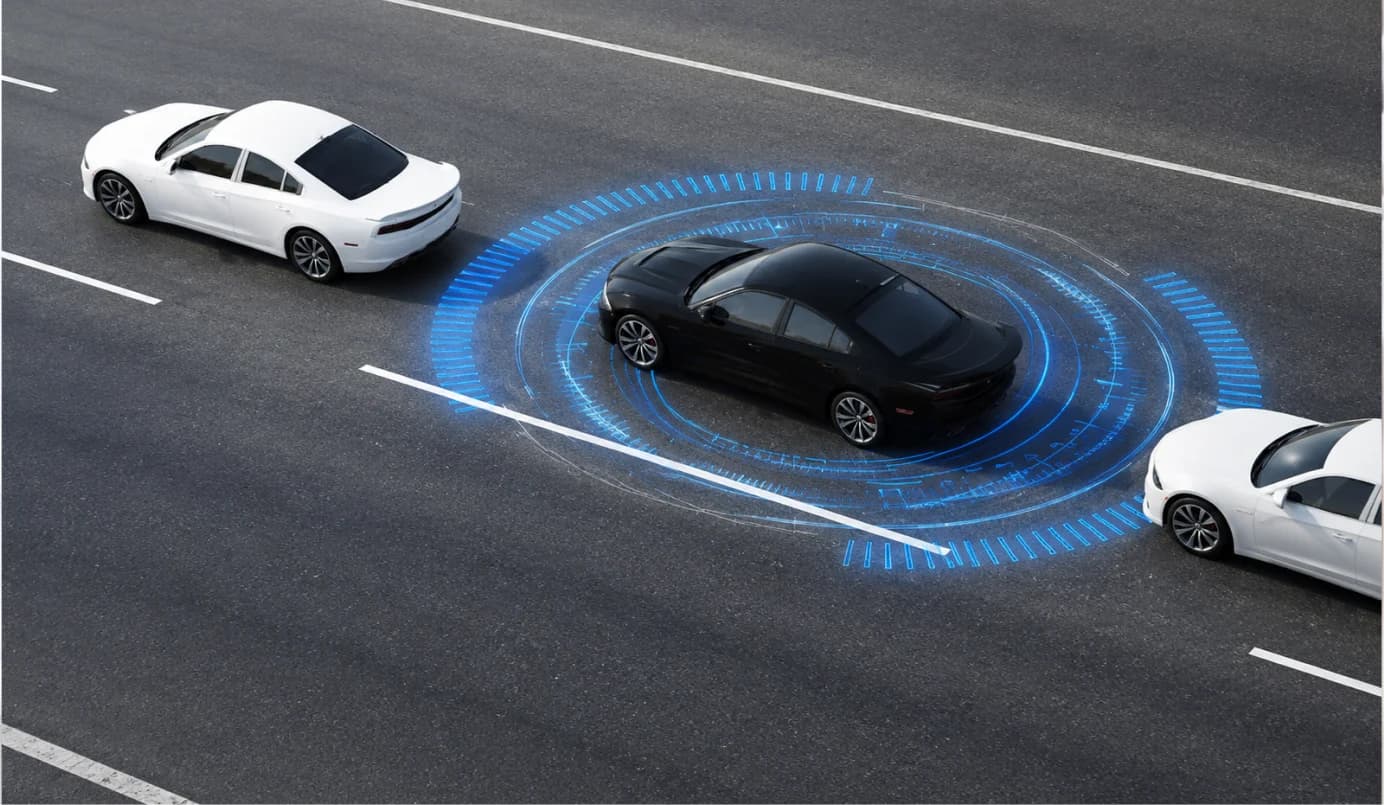
- Diagnostics dashboards on telematics data
- Fleet and dealer booking platforms
- Usage-tracking telematics interfaces
- Parts and service inventory tools
- Hand-off plans for embedded hardware integration
Shop-floor MVPs

- Production and quality monitoring dashboards
- Inventory and supply-chain tracking tools
- Dispatch scheduling interfaces
- Predictive maintenance dashboards on equipment data
- Operational visibility tools for plant staff
Field-ready agricultural MVPs

- Field data collection tools
- Crop and yield monitoring dashboards
- Offline-first interfaces for low connectivity
- Resource and seasonal planning tools
- Equipment tracking interfaces
Shopper-tested commerce MVPs

- Product discovery and recommendation flows
- Checkout and payment integrations across channels
- Inventory and order management dashboards
- Loyalty and personalisation features
- Store-associate tools for the shop floor
FAQs
MVP development, answered
Only if the direction is still unproven. Then a prototype is the cheaper test, run as its own shorter piece of work. If users have already confirmed the direction, scoping goes straight to the MVP.
It depends on the scope the hypothesis needs and the integrations involved. Scoping fixes the feature list and the sprint plan, so the schedule follows from a known scope instead of a guess.
A decision-maker who can say no, help recruiting early users, the content the product needs, and access to accounts such as app stores and payment providers. Those inputs delay more launches than code does.
Then it did its job early. You get the evidence, the analysis and a recommendation to pivot or stop. Learning cheaply that an idea doesn't work is the point of an MVP.
Keepers are built to carry into production; shortcuts are labelled as shortcuts. The keep-or-throwaway map from scoping tells you what v2 inherits and what it replaces.
Healthcare, banking and insurance, automotive, manufacturing, AgTech and retail, alongside general SaaS and mobile products.
Yes - most of ours sit inside an existing enterprise estate: a new product line, an internal platform or a regulated workflow. They follow the same scoped process as any engagement, sized for a faster first release and built to integrate with the systems around them.
Sometimes, when speed matters more than control. The trade-off is lock-in, so a no-code MVP comes with a written plan for moving off the platform if the idea succeeds.

Ready to test
your idea for real?
Tell us what you want to prove. We'll turn it into a hypothesis, a pass threshold and a fixed feature list, with a cost estimate before any development starts - for a first product or an enterprise team's next release.
Have a project in mind?
Start with the hypothesis, not the feature list.