AI & Data
Data engineering that AI can stand on.
Models fail on bad data long before they fail on bad maths. We build the pipelines, warehouses, streams and governance that turn scattered enterprise data into tables people trust, then the feature stores and vector indexes AI needs on top.
Core Services
Six capabilities, one data foundation.
From ingestion to features. Data engineering and predictive analytics is one of our five AI capabilities, built to feed the other four.
Data Integration & ETL Pipelines
Batch, streaming and change-data-capture pipelines from databases, SaaS apps, files and event streams, with a data contract at every source so a schema change fails loudly instead of silently.
Data Warehousing & Lakehouse Solutions
Warehouses and lakehouses on Databricks, Snowflake or BigQuery - or one managed warehouse and dbt, when that is all the workload needs.
Big Data Engineering
Distributed processing with Spark and cloud-native engines, for volumes and velocities a single database can't absorb.
Real-Time & Predictive Analytics
Streaming with Kafka, Kinesis or Flink, for decisions that can't wait for the nightly batch to finish.
Predictive Analytics
Forecasting, churn, risk scoring and predictive maintenance on the same governed data, with features versioned so training and serving agree.
Data Quality & Governance
Lineage, cataloguing, PII classification, access control and quality checks, each with a named owner and an agreed threshold for freshness and completeness.
How It Runs
Four phases, each with a deliverable you can inspect.
Every phase is named for what it hands over. The next one starts only when that holds up.
01
Data Audit
Sources, owners, volumes, quality and the decisions the data should support. You get a source inventory, a quality baseline and a target architecture.
02
First Pipeline
One high-value pipeline built end to end on your real data, with contracts, tests and lineage. You get proof the architecture holds, on a slice that matters.
03
Platform Build
The warehouse or lakehouse, the remaining pipelines, governance, and the AI layer - feature store and vector index - wherever the roadmap calls for them.
04
Run & Hand Over
Quality monitoring, cost dashboards, alerting and runbooks. You get a platform your team can operate, with on-call ownership written down.
Tech Stack
Platforms chosen by workload, team and cost.
Cloud platforms, warehouses, streaming and orchestration. The choice follows your workload profile, the skills your team already has, and the run-rate you can sustain.
Databricks
Snowflake

AWS

Azure

Google Cloud
Apache Spark
Kafka

Airflow
dbt

Power BI

Tableau
Fivetran
Where It Breaks
Six reasons data platforms disappoint.
Few of them are technical. Most are about ownership, contracts and cost, decided early or paid for later.
No Shared Definitions
Cloud, on-prem and legacy sources with no common keys. Integration starts with agreeing what a customer, an order or an asset actually is.
Quality Without Owners
A quality dashboard nobody acts on changes nothing. Each critical table needs a named owner and a threshold that triggers action.
Sized for Today Only
Platforms sized for this year's volume fall over at next year's. Partitioning, streaming and compute separation belong in the architecture, not the incident review.
Latency Stacked Across Layers
Delay accumulates through ingestion, transformation and serving. The fix is usually design, not a bigger cluster.
Governance Retrofitted
Access rules, lineage and PII handling bolted on after an audit cost far more than designing them in. Your regulatory obligations are architecture inputs.
Built for Reports, Not Models
Models need features, labels, embeddings and reproducible training sets. A warehouse built only for dashboards rarely supplies them.
Why Nujtech
Built for dashboards vs built for AI.
A warehouse designed only for reports stalls when the first model needs features, embeddings or a reproducible training set. The difference is decided in the design.
Dimension | Reporting-only build | Nujtech AI-ready build |
|---|---|---|
| Starting Point | Tools and headcount | Data audit and architecture |
| AI Readiness | A data lake, eventually | Feature store, vector index, versioned datasets |
| Data Quality | Checked when a report looks wrong | Checks at every layer, with owners |
| Schema Changes | Break pipelines silently | Caught by contracts at the source |
| Governance Posture | Added after the first audit | Lineage and access control from table one |
| Training vs Serving | Features computed twice, differently | One feature definition for both |

Vertical Focus
Data foundations for regulated industries.
Sectors where lineage, access control and quality evidence get asked for. Select a card for the industries.
Clinical and operational systems for healthcare

Clinical documentation, claims and connected patient data, with a clinician approving anything that affects care.
Banking, insurance and risk systems

Fraud, KYC, underwriting and claims models that risk and compliance teams can review, explain and sign off.
Engineering for automotive

Connected-vehicle data, telematics and dealer analytics, built around functional-safety and cybersecurity requirements.
Plant-floor systems for manufacturing
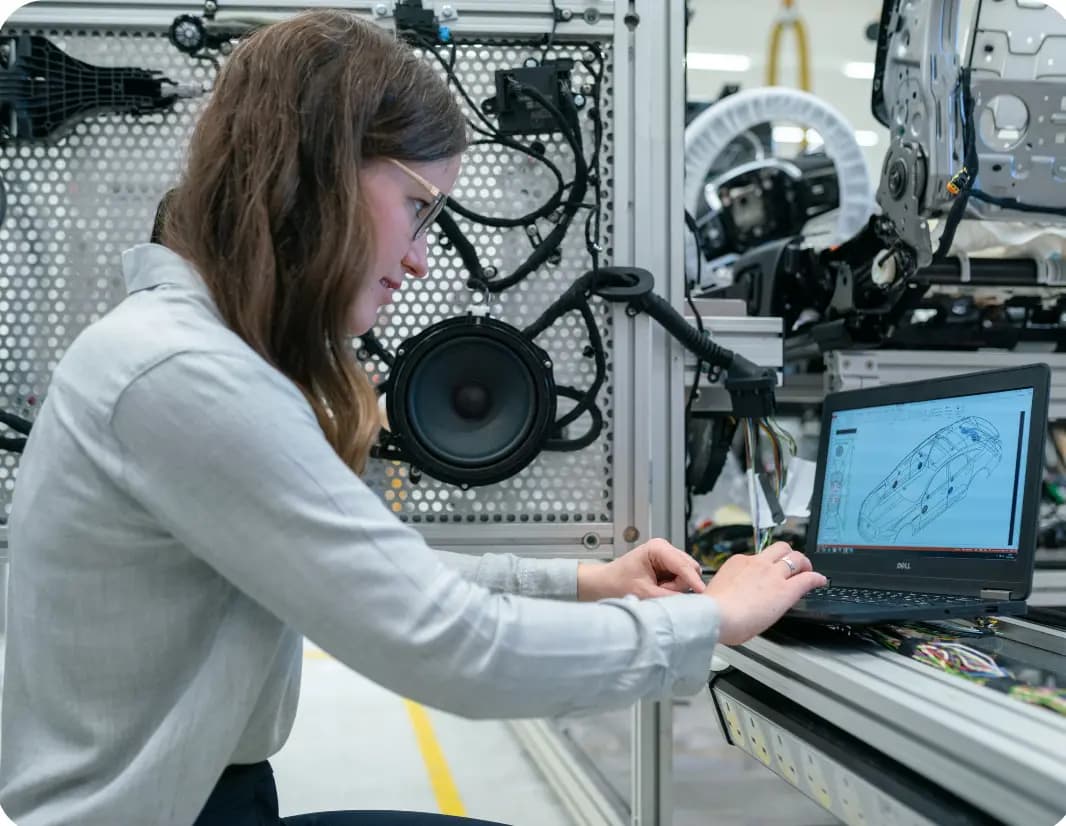
Predictive maintenance, vision inspection and forecasting that connect plant data to the business.
Data and AI for agriculture

Crop, sensor and imagery analytics designed for patchy connectivity and one growing season a year.
Retail operations and customer data

Demand forecasting, personalisation and unified customer data, tuned to the trading calendar.
FAQs
Before you build a data platform.
Building the pipelines, storage, streaming and governance that carry data from where it's produced to where it's used: dashboards, reports and AI models. On Databricks, Snowflake, BigQuery, AWS, Azure or Google Cloud, depending on the workload.
Any combination of the six capabilities above, from a single pipeline to a full platform. Dashboards and reports are built on top.
With connectors and change-data-capture from databases, SaaS apps, APIs, files and event streams, using tools such as dbt, Spark, Airflow, Azure Data Factory and AWS Glue. Each source gets a data contract, so an upstream schema change is caught before it corrupts downstream tables.
It depends on the number of sources, the state of the data and how much governance you need. The audit comes first and produces a phased plan with a named deliverable for each phase.
Run-rate follows storage, compute, streaming and how often transformations execute. The architecture phase models it, and cost dashboards ship with the platform so spend stays visible after launch.
Encryption at rest and in transit, role-based and column-level access, masking, audit logging and PII classification, through Unity Catalog or an equivalent governance layer. Each control is mapped to the obligation your sector imposes.
Feature stores for training and serving, vector indexes for retrieval, versioned datasets for reproducible training, labelling pipelines, and streams for real-time inference. Data and ML engineering are designed together, so a feature is defined once and behaves the same in training and production.
Databricks, Snowflake, Microsoft Fabric, Azure Synapse, AWS Redshift, BigQuery, Kafka, Spark, Airflow and dbt. Selection follows workload, team skills and cost, and we can help you compare Databricks, Snowflake and Fabric if you're choosing.
When volumes are modest, latency needs are measured in hours, and no AI workload is close. One managed warehouse with dbt transformations covers a lot of ground and costs far less to run than a lakehouse with streaming.
Access to source systems, a named owner for each critical dataset, sign-off on PII classification, and time with the people who know what the data means. Missing access is the delay that shows up most often.

Start with
the data audit.
Tell us which decisions the data should support, which systems hold it, and who owns each source. The first step is a data audit with a source inventory and a quality baseline, and a plain account of what it finds.
Have a project in mind?
Start with an audit of what you hold.